🚨 OTP Scams Explained: How People Lose Money in Seconds
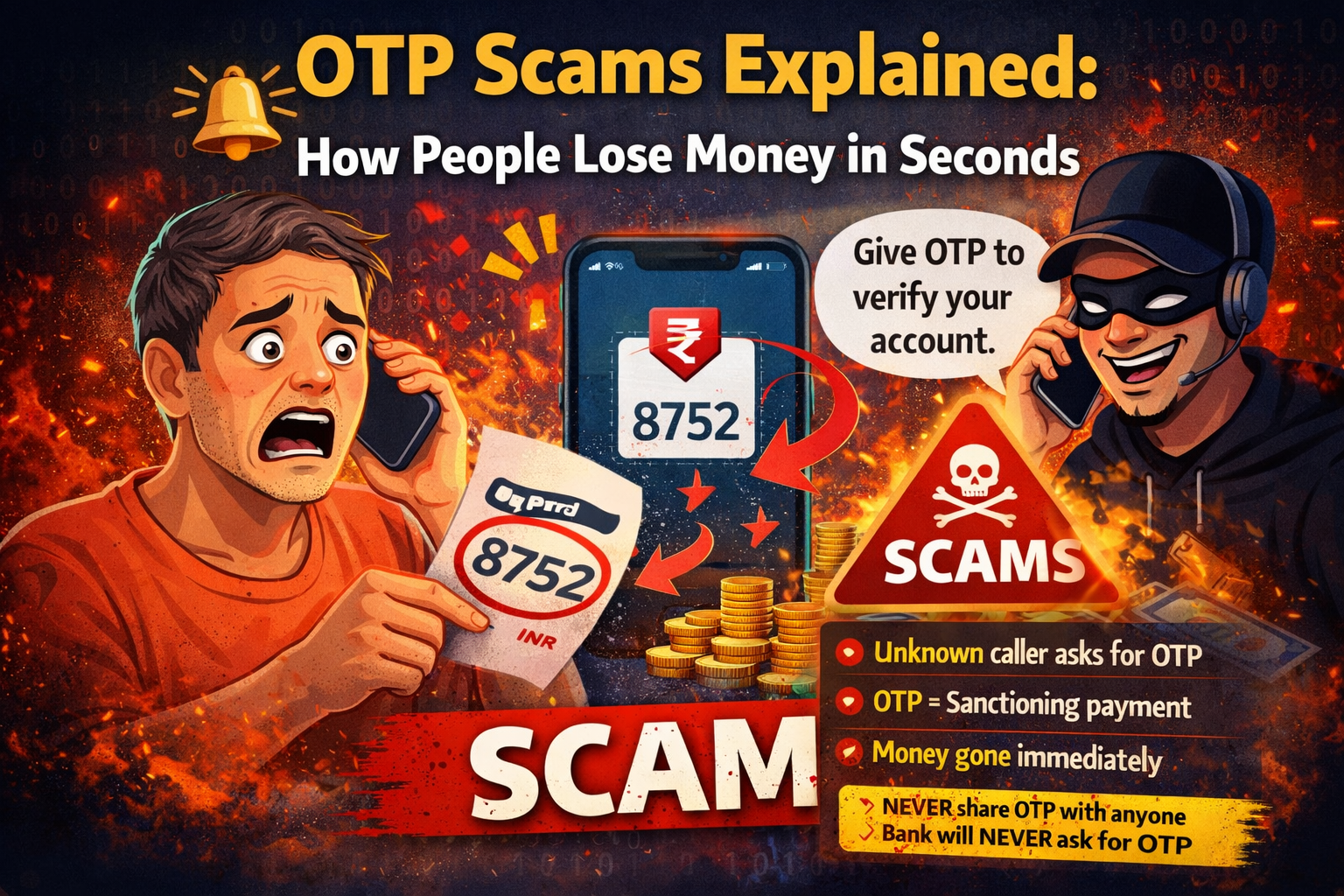 It usually starts with a simple message or call.
“Sir, please share the OTP to complete your verification.”
And within seconds… 💸 Money is gone.
No warning. No second chance.
⚠️ First, What Is an OTP?
OTP = One-Time Password
It’s a secret code sent to your phone to: - Verify your identity
- Approve transactions
- Log into accounts
👉 Think of it as the final lock on your money and accounts.
🎭 How OTP Scams Actually Work
Scammers don’t hack your phone. 👉 They trick you.
1️⃣ You Get a Call or Message
They pretend to be from: - Bank 🏦
- Delivery service 📦
- SIM provider 📱
- Government office
2️⃣ They Create Urgency
They say things like: - “Your account will be blocked!”
- “Your KYC is pending!”
- “You have a refund waiting!”
3️⃣ They Ask for OTP
They sound professional and convincing.
4️⃣ Money Is Gone 💸
That OTP was actually: - A transaction approval
- A login attempt
- A password reset
😨 Real-Life Example
Ravi gets a call: “Sir, your bank KYC is expiring today. Share the OTP.”
He shares it. ₹50,000 is gone.
🚨 Golden Rule
👉 NO bank or company will EVER ask for your OTP.
🛑 Common OTP Scams
- Fake bank calls
- Delivery scams
- Lottery messages
- SIM swap scams
- Fake job offers
🛡️ How To Protect Yourself
- Never share OTP
- Don’t trust unknown calls
- Read OTP messages carefully
- Avoid suspicious links
- Inform family members
🧠 What To Do If You Shared OTP
- Call your bank immediately
- Block transactions
- Change passwords
- Log out from all devices
- Report the fraud
💡 Final Thought
Scammers don’t need to hack you. They just need your trust for a few seconds.
👉 And that’s enough.
✅ Do This Now
✔ Never share OTP ✔ Save bank helpline number ✔ Educate your family
Awareness is your strongest security.